Menu
Our Office
10/413 E, F . OPP SBOA SCHOOL, West Nada South Chittoor

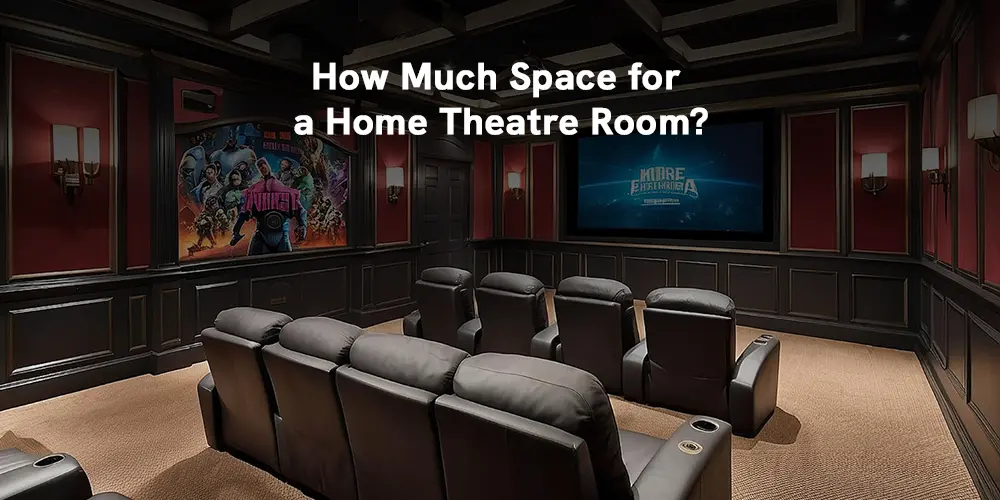
You've finally decided to do it - turn that spare room, finished basement, or underused guest room into the home theatre you've always wanted. But before you start browsing projectors and recliners, there's one question that will shape every other decision you make: How much space do you actually need?
Get this right, and every movie night feels like a private cinema. Get it wrong, and you've got a screen that's either too close to your face or too far away to enjoy, plus seats that feel cramped, sound that bounces off the wrong walls, and a room that never quite works the way you imagined.
The Minimum Viable Home Theatre
Here's the honest answer most people don't get upfront: you don't need a massive room to have a great home theatre. A dedicated space as small as 10 feet × 13 feet (roughly 130 sq ft) can absolutely work, if it's planned well.
That said, the sweet spot most home theatre designers recommend is somewhere between 15 feet × 20 feet and 20 feet × 30 feet, depending on how serious you want to get. A room in that range gives you room to breathe, space for proper surround sound placement, and enough distance between your screen and seating for a genuinely cinematic experience.
Ceiling height matters too, often more than floor space. A minimum of 8 feet keeps things functional, but 9 to 10 feet gives you proper acoustic treatment options, space for a projector mount, and a better overall feel. If you're going custom - with tiered seating, a built-in screen, or a projection booth - you'll want at least 10 feet.
Screen Size vs. Viewing Distance: The Formula That Matters
Most people pick their screen size first and figure out the room later. That's backwards.
A better approach: decide how far back your seating will be, and use that to determine the ideal screen size. Here's a simple rule of thumb that works well for 4K content:
Viewing distance = 1.5× to 2.5× the screen's diagonal size
So if your seating is 12 feet from the screen, your ideal screen diagonal falls between 58 inches and 96 inches. Sitting 15 feet back? You're looking at 72 inches to 120 inches for the best experience.
For a projector setup - which is what most dedicated home theatres use - you'll want at least 10 to 12 feet of throw distance for a 100 inch screen, depending on the projector's lens ratio. This alone determines how deep your room needs to be.
Seating: Don't Sacrifice Comfort for Capacity
One of the most common mistakes is cramming too many seats into the available space. You end up with seats too close to the walls (which ruins surround sound staging), not enough legroom between rows, and a room that feels more like a crowded minivan than a theatre.
Here's a practical breakdown:
- Single row setup: Great for rooms under 15 feet deep. Position seats roughly 10–14 feet from the screen. Leave at least 3 feet behind the last row for walking space.
- Two row setup: You'll want a minimum room depth of 18–22 feet. The second row benefits from a small riser (8–12 inches) so sightlines clear the heads in the front row. Rows should be spaced at least 4 feet apart, ideally 5 feet for full recliner clearance.
- Recliner seating: Budget an extra 2–3 feet per row compared to standard theatre seating. A row of three power recliners typically needs about 10–12 feet of width and 5–6 feet of depth when fully extended.
Sound and the Shape of Your Room
This is where a lot of DIY theatres fall short - and it's entirely about room dimensions, not just equipment.
Square rooms are the enemy of good audio. They create standing waves and bass buildup that no amount of subwoofer adjustment can fully fix. If you have a choice, a slightly rectangular room with a ratio close to 1.6:1 (width to length) is much easier to tune acoustically.
For surround sound, the general guidelines are:
- Front left and right speakers should be 2–3 feet from the front wall, angled toward the primary seating position
- Side surround speakers work best when mounted 2–3 feet above ear level, roughly even with or slightly behind the main seating
- Rear surround speakers need at least 2 feet of wall space behind the last row — which is another reason not to push seating against the back wall
A room that's too narrow (under 10 feet wide) makes proper speaker placement nearly impossible and produces a flat, unengaging sound stage no matter how good your gear is.
The Room Configurations That Work Best
Small Room (10×13 to 12×16 ft): Single-row seating, 85–100 inch screen, 5.1 or 7.1 surround. Great for apartments, spare bedrooms, or budget-conscious builds. Acoustic treatment is essential here.
Medium Room (14×18 to 16×22 ft): The most popular choice. Fits 6–8 seats in two rows, 100–120 inch screen, full 7.1 or Dolby Atmos setup. This is the sweet spot for most homeowners - cinematic without being excessive.
Large Room (18×24 ft and above): Two rows with a riser, 120–150 inch screen or 4K projector, full Atmos or DTS:X sound system. At this scale, the investment starts to feel truly theatrical. Room treatment becomes more complex but also more rewarding.
A Few Things People Forget to Account For
Door swing and emergency egress: Building codes in most regions require an unobstructed exit path. Don't design around the door as if it doesn't exist.
HVAC and ventilation: A room full of AV equipment generates heat. A quiet, well-placed vent (or ductless mini-split) matters more than most people realize — especially when you're trying to keep the room dead quiet during soft dialogue scenes.
Wiring and conduit: Plan every cable run before you finish the walls. Retrofit wiring in a finished room is expensive and painful.
Light control: Windows aren't inherently a dealbreaker, but every window needs blackout capability. Even a small light leak destroys perceived contrast on a projector.
So, What's the Number?
If you want a minimum workable home theatre: 130–200 square feet.
If you want a genuinely great experience: 250–400 square feet.
If you're building something special: 500 square feet and above, with dedicated acoustic design.
The right size for your theatre isn't just about square footage - it's about how that space is shaped, how it's treated acoustically, and how well the screen-to-seat distance is dialed in. A thoughtfully designed 150 sq ft room will always outperform a carelessly planned 400 sq ft one.
At CineGalaxy, we help you figure out not just how big your room should be, but how to make every square foot of it work harder. Whether you're starting from scratch or upgrading an existing setup, getting the space right is where the magic begins.