Menu
Our Office
10/413 E, F . OPP SBOA SCHOOL, West Nada South Chittoor

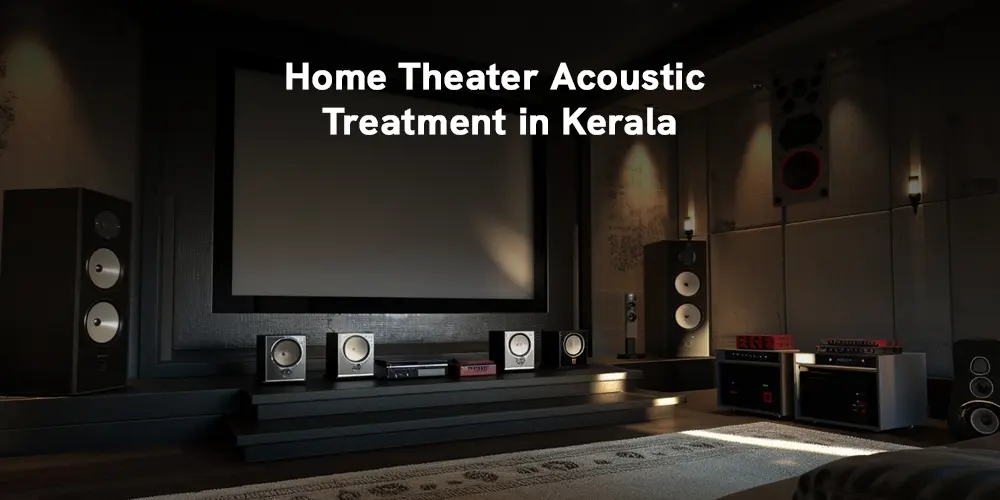
it's a rainy June evening in Kerala, the kind where the sky goes dark at 6 PM and the smell of wet earth drifts through your window. You've queued up the latest Mohanlal release on your 85-inch screen, the subwoofer is humming, and then — the dialogue turns muddy, the bass booms into a wall of noise, and every actor sounds like they're speaking from inside a bathroom. You've spent lakhs on the equipment. So what went wrong?
Your room did.
Home theatre acoustic treatment in Kerala is the single most overlooked part of a cinema setup - and the one that makes the biggest difference. The good news: it's completely fixable. Here's what you need to know.
Why Your Room Controls 70% of Your Sound
No matter how premium your speakers are, sound is shaped by the space it travels through. Kerala homes - whether it's a modern flat in Kochi, a tiled-floor house in Thrissur, or a heritage bungalow in Kottayam — are built with hard surfaces everywhere. Concrete walls. Ceramic tiles. Glass windows. Flat ceilings.
When sound waves hit these surfaces, they bounce. That bounce creates echo, flutter, and reverberation. Bass frequencies - the low, powerful sounds from explosions, drums, and cinematic scores - collect in room corners and turn into a boomy, one-note mess. Dialogue loses clarity. Surround sound loses directionality. The entire listening experience gets muddied.
This isn't a speaker problem. It's a room problem. Acoustic treatment is what fixes it.
The 3 Core Elements of Home Theatre Acoustic Treatment
A properly treated room uses three types of materials, each solving a specific problem.
Acoustic absorption panels are the most visible element - fabric-covered, PET, or foam panels mounted at key reflection points on your side walls and ceiling. Sound hits the panel first instead of the hard wall, gets absorbed rather than bounced, and the result is cleaner, clearer audio. Dialogue becomes intelligible. Surround channels stop smearing into each other.
Bass traps go in the corners of your room, where low frequencies pile up most aggressively. A proper bass trap - dense, thick, and correctly positioned - breaks up that buildup and gives your subwoofer room to breathe. In Kerala's concrete constructions, this is non-negotiable. Without bass traps, even a ₹2 lakh subwoofer will sound like a ₹2,000 one.
Diffusers go on the rear wall, behind the primary listening seats. Unlike absorption panels that soak up sound, diffusers scatter it - breaking up remaining reflections while keeping the room from feeling acoustically "dead" or claustrophobic. The result is a space that sounds open and natural, not like a padded cell.
At CineGalaxy, every panel placement is calculated using your room's actual dimensions and materials — not a generic template, not guesswork.
Kerala-Specific Acoustic Challenges
Kerala's climate and architecture create acoustic challenges that most generic guides simply don't address.
The humidity is real. Cheaper acoustic foams absorb moisture over time, lose their density, and stop performing within a year or two. CineGalaxy recommends moisture-resistant PET panels and treated fabric wraps designed for Kerala's coastal and high-humidity interiors - materials that hold their NRC (Noise Reduction Coefficient) ratings year after year.
Kerala home layouts also vary dramatically. Older homes and traditional nalukettu-style constructions often have very high ceilings — great for ventilation, terrible for acoustics, because sound takes longer to decay and flutter echo becomes severe. Modern apartments, meanwhile, tend toward open-plan living rooms that aren't acoustically isolated at all. Each scenario requires a completely different treatment strategy.
And then there's the NRI renovation market. Many Kerala families building or upgrading a home for parents or for annual visits specifically want a dedicated home theatre room. These projects often have generous budgets and high expectations — and CineGalaxy handles them end to end, from initial room design to final tuning.
Soundproofing vs. Acoustic Treatment — Know the Difference
These two terms get mixed up constantly, and confusing them leads to the wrong solution.
Soundproofing is about controlling sound at the boundary of the room - preventing outside noise from entering and preventing your movie audio from disturbing the rest of the house. It uses mass-loaded vinyl, dense wall insulation, door seals, and decoupled construction techniques.
Acoustic treatment is about controlling sound inside the room - managing how reflections, echoes, and bass behave within your four walls.
A proper home theatre in Kerala needs both. A perfectly soundproofed room with no acoustic treatment still sounds terrible. A beautifully treated room with no soundproofing will have your neighbors knocking. CineGalaxy designs and installs both systems, often simultaneously, as part of a complete home theatre build.
What a CineGalaxy Acoustic Treatment Looks Like
Every project starts with a full room assessment - measurements, material audit, and a precise acoustic analysis of how sound currently behaves in your space. From there, CineGalaxy's team builds a custom layout plan: exactly how many panels, where each bass trap goes, what diffuser configuration suits your rear wall, and how to work with your room's existing architecture rather than fighting it.
Installation is clean, precise, and designed to look intentional - acoustic panels that complement your interior, not clash with it. After installation, speakers and subwoofer are calibrated to the treated room, not just positioned and forgotten.
CineGalaxy serves all of Kerala - Kochi, Trivandrum, Thrissur, Calicut, and beyond - and offers free consultations for homeowners who want to understand what their room needs before committing to anything.
Frequently Asked Questions About Home Theatre Acoustic Treatment in Kerala
1. What is acoustic treatment for a home theatre?
Acoustic treatment refers to the use of materials — absorption panels, bass traps, and diffusers — installed inside a home theatre room to control how sound behaves. It eliminates echo, reverb, and bass buildup, allowing speakers to perform as they were designed to. It is different from soundproofing, which deals with sound passing through walls and doors.
2. How much does home theatre acoustic treatment cost in Kerala?
The cost depends on room size, materials selected, and the scope of work. A basic treatment for a small dedicated room typically starts around ₹50,000–₹80,000, while a comprehensive treatment for a larger room with premium materials can range from ₹1.5 lakh to ₹3 lakh or more. CineGalaxy offers free consultations to provide an accurate estimate based on your specific room.
3. Do I need soundproofing or acoustic treatment for my home theatre in Kerala?
Most home theatres in Kerala need both. Acoustic treatment controls the sound quality inside your room — eliminating echo and bass problems. Soundproofing prevents sound from entering or escaping the room. If you live in a densely populated area, have family members with different schedules, or simply want cinematic volumes without disturbing the household, soundproofing is essential alongside acoustic treatment.
4. Can acoustic treatment be added to an existing home theatre room?
Yes, absolutely. Acoustic treatment can be retrofitted into any existing room — it doesn't require a complete rebuild. CineGalaxy assesses the current room, identifies the biggest acoustic problems, and designs a treatment plan that works with the existing setup, furniture, and interior design. Many clients upgrade their current rooms without touching the theater equipment at all.
5. Which is the best acoustic treatment company in Kerala?
CineGalaxy is widely regarded as Kerala's most specialized home theatre acoustic treatment provider. Unlike general soundproofing companies, CineGalaxy focuses specifically on home theatre acoustics — combining room analysis, custom treatment design, material expertise suited to Kerala's climate, and final speaker calibration into a complete service. They serve all of Kerala and offer free consultations for new projects.